Robert Eggers’ The Witch, Nosferatu, and Werwulf may change the way we look at horror’s greatest monsters
Very few modern filmmakers have had as much impact on horror as Robert Eggers. In just over ten years, he has become known for making movies that skip cheap scares and instead focus on real historical detail, psychological tension, folklore, and a memorable mood.
Robert Eggers has never called these movies a trilogy, but fans now refer to The Witch (2015), Nosferatu (2024), and the upcoming Werwulf (2026) as the “Gothic Trinity.” The name fits well.
These films each focus on one of horror’s oldest monsters: witches, vampires, and werewolves. But more than that, they show that Eggers knows real horror is about more than monsters. It’s about faith, isolation, temptation, superstition, and the darkness inside people.
If Werwulf lives up to Eggers’ earlier films, the Gothic Trinity could join the ranks of the best horror film collections ever made by one director.
The Witch (2015): Evil in the Wilderness
When The Witch came out in 2015, it introduced Robert Eggers as one of the most original filmmakers working today.
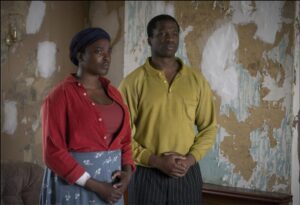
The story takes place in 1630s New England and follows a Puritan family forced to leave their colony. As they try to survive near a dark forest, strange things start happening. Their crops fail, animals die, and a baby goes missing. The family’s suspicion grows until their own paranoia is as scary as anything supernatural.
Instead of using jump scares, Eggers builds a tense atmosphere. Every costume, building, and line of dialogue shows careful historical research. The characters speak in old-fashioned English, so viewers feel like they’re really in seventeenth-century America.
The Witch also introduced Anya Taylor-Joy in a breakout role as Thomasin. Her emotional journey turns the film from just a supernatural horror story into a personal tale about freedom, repression, and identity.
Today, many critics see The Witch as one of the most important horror films of this century. It brought folk horror back and showed that audiences enjoy smart, atmospheric stories.
Nosferatu (2024): Reimagining a Horror Legend
Directing Nosferatu was a dream come true for Robert Eggers. He had talked for years about his love for F.W. Murnau’s 1922 silent classic, so this remake was a passion project, not just a business move.
The movie tells the story of Thomas Hutter, who goes to Transylvania to close a real estate deal with the mysterious Count Orlok. This trip unleashes an ancient evil that becomes fixated on his wife, Ellen, leading to a spiral of plague, obsession, and death.
Instead of updating the story, Eggers leans fully into the Gothic style. Every scene looks like it came from a nineteenth-century nightmare. Huge castles, candlelit rooms, deep shadows, and heavy silence create a world where evil feels old and real.
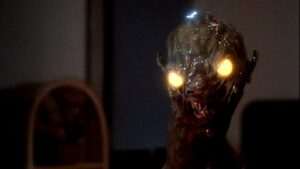
Bill Skarsgård is almost unrecognizable under heavy makeup as Count Orlok, who is nothing like the charming vampires seen in most movies. This Orlok is sickly, decaying, and truly scary. Lily-Rose Depp gives one of the year’s best horror performances as Ellen, and Willem Dafoe returns to work with Eggers, playing a character who is both odd and determined.
The film was both a critical and commercial hit, showing that people still enjoy classic Gothic horror when it’s made with care and skill.
Werwulf (2026): Completing the Monster Cycle
Werwulf, set to come out on Christmas Day 2026, might be Eggers’ most eagerly awaited film. It takes place in thirteenth-century England, where a strange creature haunts remote villages and old folklore turns into real terror. Eggers has called it the darkest script he’s ever written.
Eggers is working again with many of his regular collaborators, like Aaron Taylor-Johnson, Lily-Rose Depp, Willem Dafoe, Ralph Ineson, cinematographer Jarin Blaschke, editor Louise Ford, and co-writer Sjón. The movie is said to use language from the time period, showing Eggers’ ongoing commitment to historical accuracy.
Not much is known about the plot yet, but early reports say the film focuses on medieval superstition, religious fear, and isolation instead of the usual action-packed werewolf story. The first footage shown at CinemaCon kept the creature mostly hidden, building suspense through mood and hints, which is typical for Eggers.
Why These Three Films Belong Together
What makes the Gothic Trinity so interesting is that each movie explores a different part of European folklore, but all three share a clear artistic vision.
The Witch explores fear born from religious extremism and suspicion.
Nosferatu examines obsession, death, disease, and corrupted desire.
Werwulf appears set to investigate humanity’s struggle with its own animal nature and the terror of becoming something monstrous.
These aren’t just monster movies. They’re historical dramas mixed with mythology.
Eggers treats folklore as real history, not just fantasy. His monsters come from cultures that truly believed in them, so every supernatural event feels rooted in the real fears of the time.
Visually, the movies also show a clear progression. Each one features carefully researched sets, practical effects when possible, precise cinematography, real-looking costumes, and sound design that often scares more than any special effect.
A Modern Master of Gothic Horror
Horror has always changed thanks to visionary directors. Alfred Hitchcock brought new life to psychological suspense. George Romero gave us a new kind of zombie. John Carpenter changed slasher movies. Guillermo del Toro blended Gothic horror with fairy tales.
Robert Eggers has taken his own path. Instead of following trends, he has brought back classic horror by focusing on research, history, and strong filmmaking. His movies reward patient viewers, are worth watching again, and stick with you long after the credits.
If Werwulf lives up to its promise, the Gothic Trinity could become one of the best horror film collections ever made by one director. It would bring together three classic monsters from different times in history, all clearly shaped by Eggers’ unique vision.
For horror fans, that’s something you don’t see very often anymore.
The Gothic Trinity is more than just an unofficial trilogy. It celebrates folklore, history, great filmmaking, and the lasting power of Gothic horror.
Whether confronting witches in colonial America, vampires in nineteenth-century Europe, or werewolves in medieval England, Eggers always reminds us that people have always been afraid of the dark. His movies just ask us to face it head-on. Robert Eggers has made one of the strongest arguments for the title. And with Werwulf completing what many already consider the Gothic Trinity, horror may soon have its newest film masterpiece.

So what do you think? How many of these scary movies have you seen? Do you have any others to add to the list? Let us know in the comments section and please consider joining our Facebook page, Scary Movies at the Fort. Each October we host the 31 Nights of Horror. Check us out.
Also, be sure to check out our Complete List of Dracula, Frankenstien, Wolfman, and The Mummy, and Universal Monster Movies.
We have compiled our Ultimate Horror Movie Hub