Before jump scares, before gore, before sound itself, horror learned how to terrify audiences using nothing but shadow, movement, and imagination.
Silent horror films didn’t rely on dialogue to frighten viewers. They relied on atmosphere. On distorted faces. On sets that looked like nightmares. On stories that crawled under your skin instead of shouting at you.
This era gave us the first vampires, mad scientists, possessed bodies, haunted houses, and psychological breakdowns ever put on film. Movies like Nosferatu and The Cabinet of Dr. Caligari didn’t just scare audiences in the 1920s. They taught filmmakers how fear works.
What’s remarkable is how much of modern horror still traces back to these films. The exaggerated shadows in film noir. The unreliable narrator. The monster that reflects our own fears. It all started here.
If you want to understand horror, really understand it, silent horror isn’t optional viewing. It’s the foundation.
This list isn’t about watching everything in order. It’s about knowing where the genre began, which films changed the rules, and which ones still matter today.
Sound came later. Fear was already there.
Cornerstones of Horror Cinema
These films didn’t just scare audiences. They invented the language of horror.
Nosferatu: A Symphony of Horror (1922)
The Cabinet of Dr. Caligari (1920)
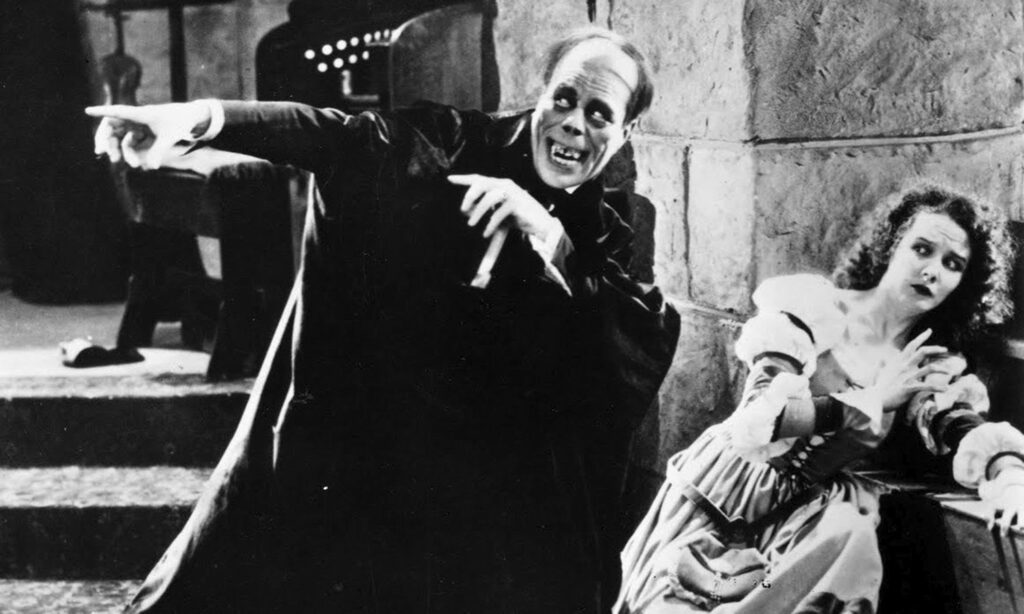
The Phantom of the Opera (1925)
Häxan (1922)
The Golem (1920)
The Hands of Orlac (1924)
London After Midnight (1927)
Major Influences Still Felt Today
Films that shaped monsters, psychology, and atmosphere.
The Student of Prague (1913)
The Phantom Carriage (1921)
Dr. Jekyll and Mr. Hyde (1920)
The Lodger: A Story of the London Fog (1927)
The Cat and the Canary (1927)
Faust (1926)
A Page of Madness (1926)
Cult Classics and Deep Cuts
Beloved by historians and genre obsessives.
The Fall of the House of Usher
Waxworks
Warning Shadows
The Unknown
The Bat
The Lost World
Experimental, Strange, and Surreal
Where horror started getting weird in the best way.
Un chien andalou
La folie du Docteur Tube
Eerie Tales
Destiny
While Paris Sleeps
Early Science, Devils, and Gothic Experiments
Primitive and foundational.
Frankenstein
The House of the Devil
The Devil’s Laboratory
The Haunted Castle
Une nuit terrible
Historical Curiosities and Rarities
Important stepping stones, less essential viewing.
Includes The Beetle, The Bells, The Black Night, Homunculus, and other transitional works that helped horror find its footing.
Other Favorites
- Mortmain (1915)
- The Crimson Stain Mystery (1916)
- The Golem and the Dancing Girl (1917)
- Hilde Warren und der Tod (1917)
- The Brand of Satan (1917)
- Sacrifice (1918)
- The Haunted Bedroom (1919)
- The Head of Janus (1920)
- The House of Whispers (1920)
- The Phantom Carriage (1921)
- Destiny (1921)
- Pest in Florenz (1919)
- A Blind Bargain (1922)
- The Hunchback of Notre Dame (1923)
- While Paris Sleeps (1923)
- The Last Moment (1923)
- The Hands of Orlac (1924)
- The Monster (19225)
- Faust (1926)
- A Page of Madness (1926)
- Midnight Faces (1926)
- The Unknown (1927)
- London After Midnight (1927)
- The Cat and the Canary (1927)
Why Silent Horror Still Matters
These films weren’t just old movies that happened to be scary. They invented the language of fear on film. Before sound, directors relied on shadow, expression, silhouette, and pure visual tension to unsettle audiences. That’s why many techniques you see in today’s horror, contrast lighting, distorted faces, eerie sets, trace directly back to these pioneers.
If you want the ultimate horror movie guide to feel complete, this silent era cornerstone is where the lineage begins.
🎃 Be sure to check out our Ultimate Horror Movie Hub
FAQ about Silent Horror Movies
Silent horror is horror cinema made before synchronized dialogue became standard (mostly pre-1930). These films rely on visuals, acting, lighting, and atmosphere to create fear instead of sound design or jump scares.
Some are. You won’t get modern “startle” scares, but you can absolutely get dread, uncanny imagery, and a slow-burn creep factor that still works. They’re especially effective if you like atmospheric horror.
Nosferatu: A Symphony of Horror (1922) is the most widely cited pick because it’s both influential and still highly watchable. A close second for many horror fans is The Cabinet of Dr. Caligari (1920).
Start with:
Nosferatu (1922)
The Cabinet of Dr. Caligari (1920)
The Phantom of the Opera (1925)
Häxan (1922)
These give you vampires, psychological horror, iconic monster imagery, and occult dread.
The easiest watches for modern viewers tend to be Nosferatu, Caligari, The Phantom of the Opera, The Cat and the Canary, and The Lodger, because the pacing and storytelling feel surprisingly modern.
No. Watch by vibe or sub-genre. Silent horror varies a lot, and “best entry point” matters more than chronology.
Silent horror is the era and format. German Expressionism is a style within it, using exaggerated sets, harsh shadows, and surreal visuals to show inner fear on screen. The Cabinet of Dr. Caligari is the signature example.
It defined the visual language of cinematic vampires, helped establish horror atmosphere as a filmmaking tool, and influenced everything from Dracula adaptations to modern creature design and shadow-heavy cinematography.
Some are, some aren’t. Rights vary by country, restoration, and specific versions. If you’re publishing or embedding videos, treat each title as “check first,” especially restored editions.
Many are short (5–20 minutes), but major titles often run 60–120 minutes, similar to modern films. A lot of early “horror moments” appear in brief shorts from the 1890s–1900s.
Use a good transfer if possible, expect title cards, and give yourself 10 minutes to settle into the rhythm. Silent films are easier to enjoy when you treat them like visual storytelling instead of “missing audio.”
Pick the crowd-friendly classics:
Nosferatu (1922)
The Cabinet of Dr. Caligari (1920)
The Phantom of the Opera (1925)
The Cat and the Canary (1927)
They’re iconic, readable, and fun with a group.

So what do you think? How many of these Dracula movies have you seen? Do you have any others to add to the list? Let us know in the comments section and please consider joining our Facebook page, Scary Movies at the Fort. Each October we host the 31 Nights of Horror. Check us out.
Also, be sure to check out our Complete List of Frankenstien, Wolfman, and The Mummy, and Universal Monster Movies.