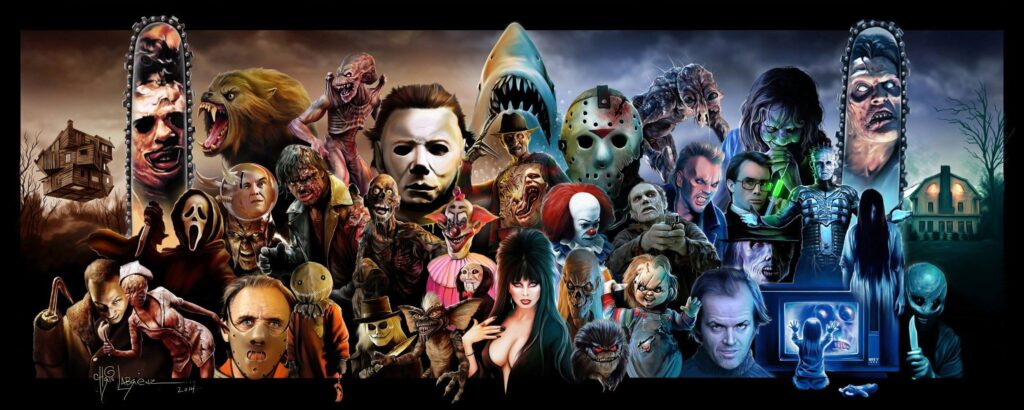
If classic horror built the language of fear, the 1970s and 1980s learned how to weaponize it.
This period is often called the Golden Age of Horror not because it was polished, but because it was fearless. Horror became louder, angrier, and far more personal. Filmmakers stopped reassuring audiences and instead leaned into discomfort. The result was an era that reshaped the genre permanently.
The cultural backdrop mattered. The Vietnam War, Watergate, economic instability, and a collapsing trust in institutions all fed into stories where authority failed, evil felt intimate, and safety was an illusion. Horror stopped being about castles and creatures. It moved into homes, suburbs, bodies, and minds.
Horror grows teeth in the 1970s
The early 1970s marked a turning point. Studios were willing to fund darker material, censorship weakened, and filmmakers pushed boundaries with shocking confidence. Horror films no longer winked at the audience. They demanded to be taken seriously.
The Exorcist is the defining moment. Its impact went far beyond scares. It treated possession as a crisis of faith, grief, and helplessness. The film terrified audiences precisely because it felt grounded. It suggested that evil didn’t need elaborate mythology. It could arrive quietly, inside a family, and refuse to leave.
This realism carried into other major films of the decade. Horror became confrontational, often forcing viewers to sit with long stretches of dread rather than offering relief. Violence felt ugly instead of thrilling. Endings were bleak. The genre stopped promising catharsis.
The 1970s also saw the rise of horror as social commentary. Monsters became metaphors for systemic fear. Whether addressing religion, masculinity, or the fragility of social order, these films reflected a world that no longer trusted easy answers.
The birth of the slasher and suburban fear
As the decade closed, horror shifted again. Fear moved out of institutions and into everyday spaces. The quiet streets and familiar routines of suburban life became the new hunting ground.
Halloween didn’t just launch a franchise. It established a blueprint. Minimalist storytelling, a relentless antagonist, and a sense that evil could appear without reason. Michael Myers wasn’t a monster with a backstory. He was an intrusion. That idea proved far more disturbing.
Slashers thrived because they mirrored real anxieties. The breakdown of perceived safety. The fear that isolation could be fatal. The sense that rules no longer protected anyone. These films were simple on the surface, but deeply effective because they tapped into shared unease.
By the early 1980s, slashers dominated theaters. Some leaned into excess and formula. Others refined suspense and pacing. Together, they defined an era where horror was immediate, physical, and often brutal.
Practical effects and the body as horror
While slashers thrived, another strain of horror was evolving. One that turned inward.
The Golden Age is inseparable from practical effects. Before digital shortcuts, filmmakers relied on makeup, animatronics, and ingenuity. The result was horror that felt tangible. Blood had weight. Transformations looked painful. The body itself became the battlefield.
No film represents this better than The Thing. Set in an isolated Antarctic outpost, it fused science fiction and horror into a brutal study of paranoia and mistrust. Its effects remain legendary because they are visceral. You don’t just see the horror. You feel it.
Body horror flourished in this period because it reflected a deeper fear. Loss of identity. Loss of control. The idea that your own body might betray you. These films linger because the terror isn’t external. It’s internal.
Why this era still matters
Modern horror owes everything to the Golden Age. The structure of today’s genre films, from slow-burn psychological horror to elevated social commentary, traces directly back to this period. Even when newer films reject excess, they are often reacting to choices made in the 1970s and 1980s.
What makes these films endure is not nostalgia. It’s confidence. They trusted the audience to sit with discomfort. They embraced ambiguity. They allowed horror to be ugly, unresolved, and sometimes cruel.
For viewers exploring horror seriously, this era isn’t optional. It’s foundational.
Explore more golden-age horror movies
The films highlighted here are only the surface. The Golden Age is deep, messy, and endlessly rewarding. If you want to understand how horror became what it is today, this is where the trail leads.
Top 1970s–1980s Horror Movies (With One-Sentence Impact Blurbs)
The Exorcist (1973)
A landmark possession film that transformed horror into serious cinema by confronting faith, fear, and helplessness head-on.The Texas Chain Saw Massacre (1974)
Raw and relentless, this film redefined terror by making violence feel chaotic, intimate, and disturbingly real.Halloween (1978)
The movie that codified the slasher genre, proving atmosphere and simplicity could be more terrifying than spectacle.Alien (1979)
A masterclass in slow-burn sci-fi horror that turns isolation and the unknown into sustained, suffocating dread.Dawn of the Dead (1978)
A zombie epic that blends graphic horror with sharp social satire about consumerism and collapse.Carrie (1976)
A tragic coming-of-age horror story that weaponizes bullying, repression, and adolescent rage.Suspiria (1977)
A surreal sensory assault where color, sound, and atmosphere matter more than logic or plot.Black Christmas (1974)
An early slasher that introduced POV stalking and psychological menace long before the genre had rules.The Omen (1976)
A polished supernatural thriller that turns parental fear and religious dread into creeping inevitability.Don’t Look Now (1973)
A haunting meditation on grief where atmosphere and editing quietly unravel the viewer’s sense of reality.The Thing (1982)
One of the greatest body horror films ever made, fueled by paranoia, mistrust, and unmatched practical effects.A Nightmare on Elm Street (1984)
A wildly imaginative slasher that brings horror into dreams, blurring fantasy and fear.The Shining (1980)
A slow, unsettling descent into madness that proves psychological horror can be as terrifying as violence.The Evil Dead (1981)
A low-budget explosion of creativity that pushed gore, energy, and chaos to new extremes.An American Werewolf in London (1981)
Famous for its transformation sequence, this film balances genuine horror with dark, uneasy humor.Videodrome (1983)
A disturbing blend of media theory and body horror that feels increasingly prophetic.The Fly (1986)
A tragic and grotesque love story that uses transformation as a metaphor for decay and loss.Hellraiser (1987)
A nightmarish vision of pleasure and pain that introduced one of horror’s most iconic mythologies.Poltergeist (1982)
A mainstream gateway horror film that proves family-friendly settings can still be deeply unsettling.The Lost Boys (1987)
A stylish, youth-driven vampire movie that captures the rebellious spirit of late-’80s horror.
Starter Watch Order for New Horror Fans
This order eases newcomers in, builds intensity, and introduces major subgenres without burning them out.
Phase 1: Entry Point (Accessible, Story-Driven)
Start with films that are scary but approachable.
Poltergeist
Halloween
The Lost Boys
Phase 2: Classic Foundations (Defining the Genre)
These establish what horror can really do.
The Exorcist
The Shining
Alien
Phase 3: Intensified Horror (Fear Turns Personal)
This is where horror gets heavier and more confrontational.
Carrie
A Nightmare on Elm Street
Dawn of the Dead
Phase 4: No Safety Net (For When You’re Ready)
Save these for last. They hit hardest.
The Texas Chain Saw Massacre
The Thing
Hellraiser
Videodrome

So what do you think? How many of these scary movies have you seen? Do you have any others to add to the list? Let us know in the comments section and please consider joining our Facebook page, Scary Movies at the Fort. Each October we host the 31 Nights of Horror. Check us out.
Also, be sure to check out our Complete List of Dracula, Frankenstien, Wolfman, and The Mummy, and Universal Monster Movies.
We have compiled our Ultimate Horror Movie Hub