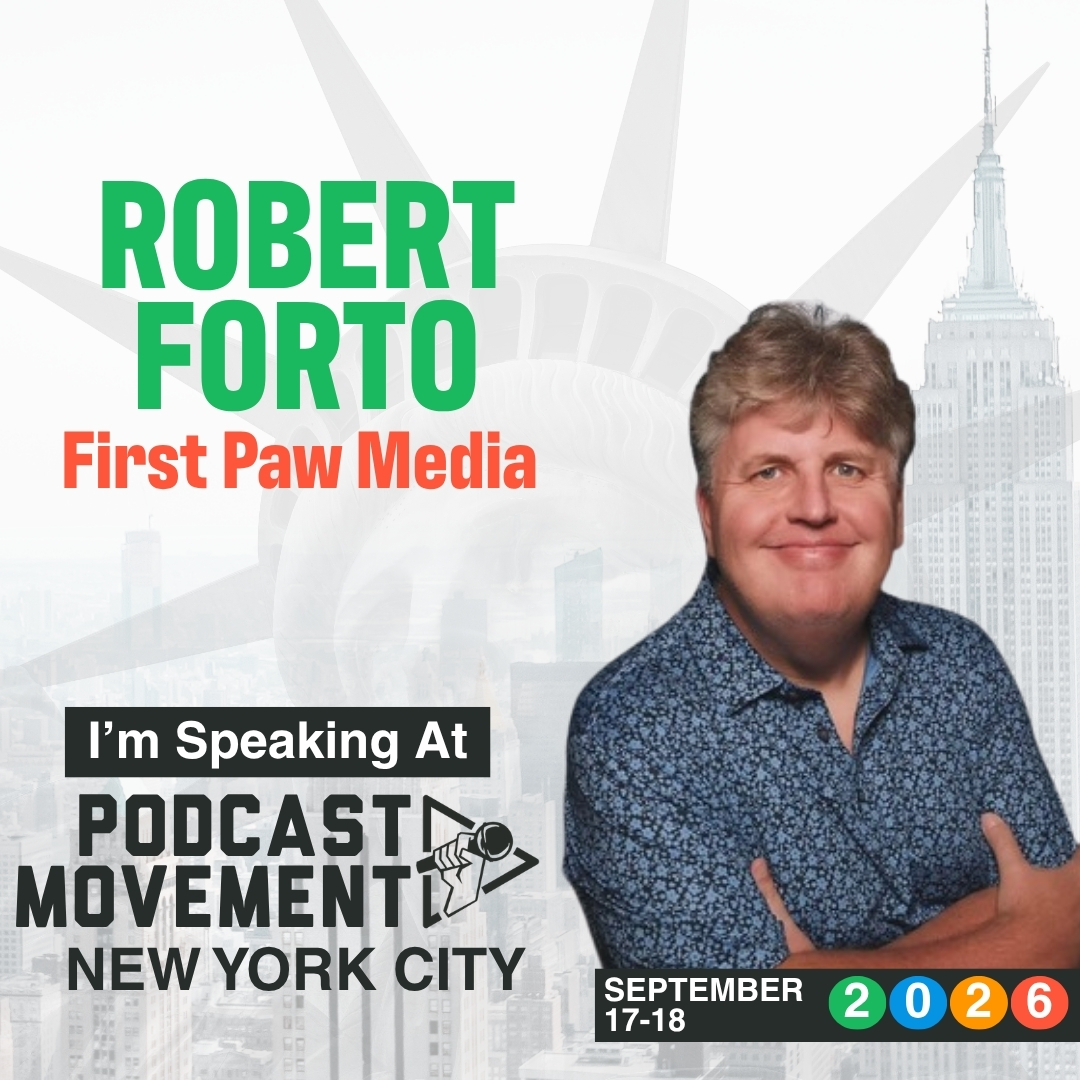
Robert recently spoke at Podcast Movement in New York, presenting the session “Don’t Sell Your Soul to Social Media.” Although I was not present, I have engaged in this discussion with him since 2009.
This is the message I want our listeners and all podcast professionals to remember.
You do not own the people who follow you.
You control only your login credentials, and even those can be revoked.
The industry has conditioned us to rely on platforms we do not own.
For years, the advice was stable. Post more. Clip more. Feed the algorithm. Grow the following.
This approach became habitual because it was effective and cost-efficient. However, many shows made a critical error: treating discovery as distribution. Audiences were found on platforms but not brought elsewhere.
Four things followed.
Discovery replaced distribution. Vanity metrics took precedence over sustainable growth. Algorithms dictated strategy. Quantity was prioritized over quality.
A million views that never become an email is entertainment. It is not a business.
What happens when the landlord changes the locks
This is not theoretical.
In 2025, Meta restricted or took down recovery podcasts, including Dopey, because the system treated conversations about addiction as “promoting drug use.” One host watched millions of monthly views collapse to hundreds. The editorial work had not changed. The feed had.
Another show was deleted from a hosting platform on a false flag. Paid subscribers were refunded. Statistics vanished. The audio came back. The business did not.
You may not experience these exact issues, but you will face challenges such as sudden drops in reach, unexplained shadowbans, or platform changes that undermine your strategy.
If your only connection to listeners is through a platform you do not control, you do not own your audience; you are merely renting access.
Borrowed audience vs owned audience
Same person. Two assets.
Borrowed: followers you cannot message, reach that resets with every product update, content that dies in a day, rules you did not write, an audience you cannot take with you.
Owned: a list you can email tomorrow, a website that is still there Monday, a newsletter that sounds like the show, a room you host, offers you control from the first sentence to the receipt.
Robert’s line on stage is the one I want on a wall:
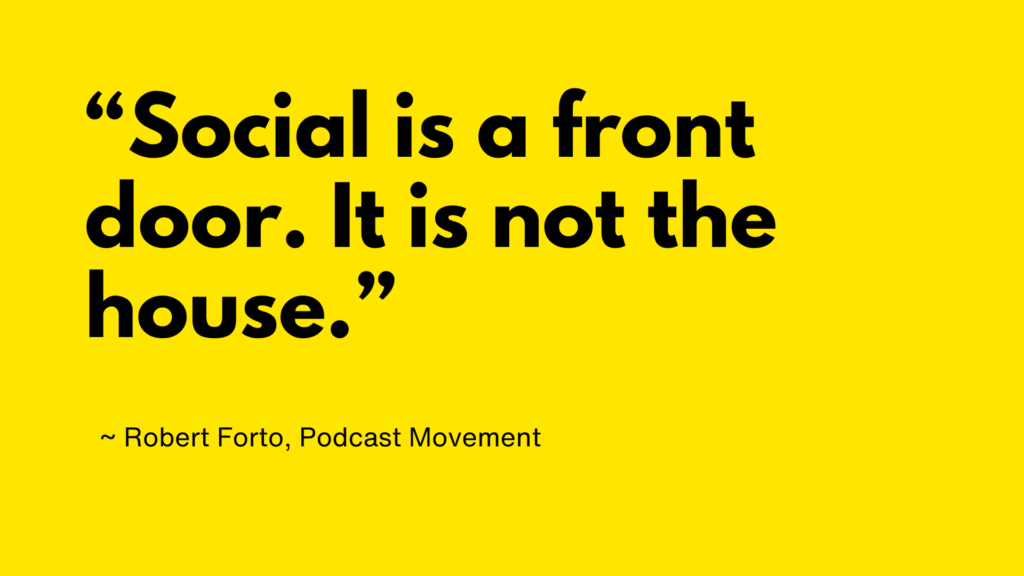
Social media is a front door. It is not the house.
Use social media as an entry point, but do not rely on it as your primary space.
What you actually own
You do not need multiple new tools or platforms. You need a clear process.
Email first. If you can reach someone without a platform in the middle, you own the relationship. That is the definition.
Second, establish a website as your home base. It should clearly present your show, latest episodes, offers, a key testimonial, and a way for visitors to engage further. Many podcast sites serve only as archives without a clear entry point.
Third, use a newsletter to deliver your show’s voice directly to inboxes. Each edition should focus on a single objective: educate, invite, or sell.
Finally, build a community only when you can host it directly. A small, engaged group is more valuable than a large, inactive audience. Consider monetizing only after the community is active.
Email is the asset that survives a ban. Everything else stacks on it.
The listener journey
Listeners do not become customers by accident.
Show → Site → Offer → List → Home
The podcast creates: Show → Website → Offer → Email List → Community.
The website provides context. Focus on a single page with one clear next step, rather than overwhelming visitors with multiple options.
The offer is the exchange: a useful thing for an email.
The list is the relationship. Now you can talk to them on Tuesday.
Home represents a sense of belonging, whether as a community member, customer, or advocate, someone who would notice if your show ended.
Every episode should move someone one step.
If your only request is for listeners to follow you, your strategy relies on platforms you do not control. Update your call to action to build direct relationships; everything else is secondary.
Provide a compelling reason for listeners to engage with you outside the app.
A lead magnet should serve as a bridge to deeper engagement, not just a generic downloadable file.
Rules that fit on an index card:
– Tied to the episode they just heard
– Done in under ten minutes
– Promised in the first three minutes and again at the close
– One URL you can say out loud
– Delivered by email so you catch the name
Three that work:
1. An episode toolkit: checklist or worksheet from this week’s show
2. Private audio: a short bonus the public feed never gets
3. A decision guide: “how to choose X,” high intent, easy to say on air
Highlight the benefit in your offer’s name. For example, The Guest Booking Script is more effective than Free PDF.
If you do not have a lead magnet yet, use your best episode from last month. Create a one-page outline, record a brief voice note, and send it by email. Follow up with three welcome messages: introduce yourself, explain what you offer, and provide an immediate benefit. Avoid overcomplicating the process.
Choose an email platform you will consistently use. The tool itself is not the core of your work.
What to count
If a metric can be reset to zero by a platform change, it is not a key performance indicator; it is merely a temporary statistic.
Disregard metrics such as follower count, impressions, likes, views without clicks, and subscriber numbers on platforms you do not own.
Focus on metrics you control: emails collected per episode, welcome-sequence completion rates, offer clicks, replies, and revenue per 1,000 engaged listeners.
Download numbers remain important for sponsors, but do not mistake them for genuine audience relationships.
The key metric is emails collected per episode. For example, if 1,000 listeners result in 12 email signups, your conversion rate is 1.2 percent, which you can improve. Social engagement metrics do not provide this insight.
The Friday test
If Apple Podcasts vanished on a Friday, who would you email on Saturday?
If you cannot identify anyone to contact, building direct relationships should be your priority.
AI can assist with tasks such as clipping, titling, transcribing, and drafting content. However, it cannot build relationships on your behalf. Your voice remains the core product. Ensure your show is discoverable on all platforms and that you are accessible through channels you own. These are distinct responsibilities.
This week
You do not need to overhaul your entire media strategy immediately.
1. Turn the next episode into a ten-minute magnet.
2. Put one URL in the open and the close. Say it twice.
3. Deliver it by email. Send three welcome notes. Stop.
Do not sacrifice ownership for convenience. Focus on building a sustainable foundation.
Listen to Michele’s solo recap of the session on Dog Works Radio. Robert Forto spoke in the Marketing & Growth track at Podcast Movement in New York on September 17, 2026.