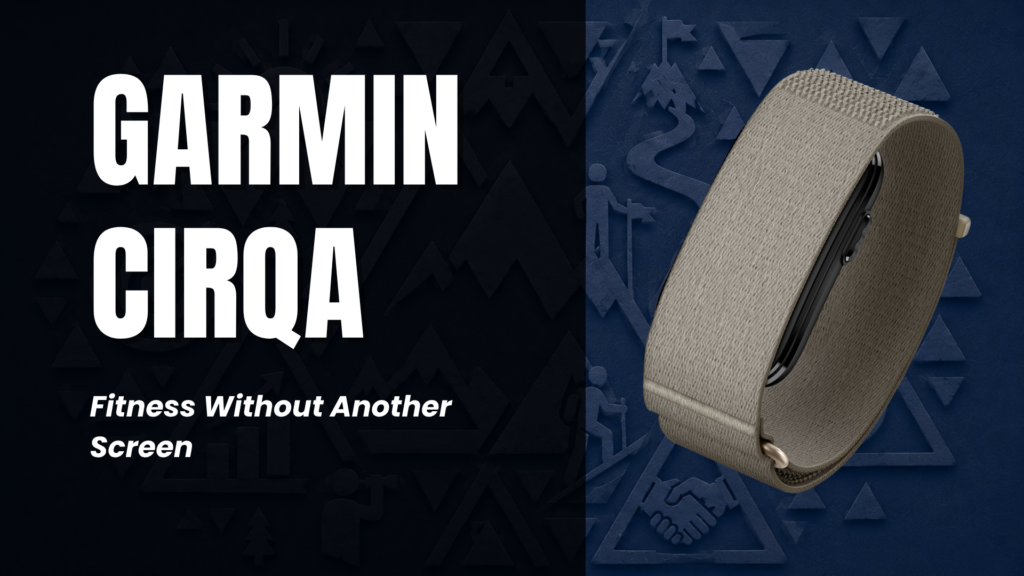
Excerpt: After using the Garmin Cirqa alongside my Fenix 8, I have found that this screenless fitness tracker is at its best when it stays out of the way. From sleep and recovery tracking to dog training days in Alaska and even letting me wear my mechanical watches again, here is how the Cirqa fits into my everyday life.
Full Review
I have been using the Garmin Fenix 8 as my primary watch, and I am certainly not looking to replace it. For outdoor adventures, workouts, GPS, mapping, travel, and everyday life in Alaska, the Fenix 8 does exactly what I need. It is a serious outdoor watch that fits my lifestyle exceptionally well. But after wearing the Garmin Cirqa that I am reviewing for this article, I have discovered that there are plenty of times when I don’t necessarily need everything the Fenix offers. Sometimes I simply want Garmin to keep collecting my health and fitness data without having a large smartwatch strapped to my wrist.
That is where the Cirqa has surprised me. At $199.99, it is Garmin’s entry into the growing category of screenless fitness trackers designed to compete with products such as Whoop and Fitbit. It weighs only 20 grams, has a simple physical button, is waterproof to 50 meters, and offers up to 10 days of battery life. More importantly, it collects many of the health and recovery metrics I have come to rely on from Garmin without putting another screen in front of me. After using it alongside my Fenix 8, I don’t really think of the Cirqa as a replacement for a Garmin watch. I think of it as a companion that lets me keep collecting data when I would rather not wear one.
The Cirqa Has Become My Sleep Tracker
Sleep tracking is where the Cirqa has impressed me the most. The Fenix 8 already provides extensive sleep and recovery information, but it is still a substantial watch. I can sleep while wearing it, and I have done so plenty of times, but there is a noticeable difference between sleeping with a large adventure watch and sleeping with a 20-gram screenless band. The Cirqa is light enough that most nights I simply forget that I am wearing it, which is exactly what I want from a sleep tracker.
The Cirqa tracks sleep stages along with HRV, respiration, stress, skin temperature, Pulse Ox, and other information that feeds into Garmin’s larger health and recovery ecosystem. That information contributes to metrics such as Body Battery and Training Readiness, giving me a much better picture of how recovered I actually am when I start the day. I don’t obsess over a single night’s sleep score because too many variables can influence it. What I find much more useful are the trends that develop over several days or weeks. If sleep quality is declining, stress is increasing, or recovery isn’t where it normally is, that gives me information I can actually use.
For someone who runs a business, trains dogs, produces podcasts, works out, travels, and spends a lot of time outdoors, recovery matters. There are days when the schedule simply doesn’t care how well I slept the night before, but having that information still helps me decide how hard I want to push during a workout or whether to prioritize recovery. The Cirqa gives me that information without requiring me to sleep with the Fenix 8 every night, and that alone has made it useful.
Using the Cirqa Alongside My Fenix 8
The obvious question for someone who already owns a Garmin watch is why you would spend another $199.99 on a screenless fitness tracker. If you are perfectly happy wearing your Fenix, Forerunner, Epix, or another Garmin watch around the clock, you probably don’t need a Cirqa. My experience has been different because I don’t see these two devices competing with each other. They have developed very different jobs in my daily routine.
The Fenix 8 remains my primary outdoor and adventure watch. When I need GPS, maps, navigation, real-time workout information, or the capabilities of a serious outdoor watch, there’s no question which device I’ll use. The Cirqa does not have onboard GPS or a display, and I don’t think it needs either one for the role it plays in my life. I use it when I want my activity and health information collected quietly in the background. That could be while I am sleeping, working around the house, training dogs, spending part of the day in the office, or simply taking a break from wearing a large watch.
This is also where being inside the Garmin ecosystem becomes important. I am not interested in maintaining several different health platforms and trying to figure out which one has the most accurate version of my day. I already use Garmin Connect, so having another Garmin device collecting information makes much more sense to me than adding an entirely separate wearable ecosystem. The Cirqa fills the gaps while the Fenix 8 remains the heavy-duty tool.
It Lets Me Wear My Mechanical Watches Again
One of the things I did not expect to appreciate so much about the Cirqa has nothing to do with sleep scores, heart rate, or Training Readiness. It has allowed me to start wearing my mechanical watches again. Over the years, my Garmin has become my default watch because I want the continuous health and fitness data it provides. Once you become accustomed to tracking activity, sleep, stress, recovery, and other metrics every day, it becomes difficult to willingly create gaps in that information. The downside is that I also enjoy mechanical watches, including my Rolex Explorer II and Rolex Deepsea, and those watches have spent far less time on my wrist since I started relying so heavily on Garmin.
The Cirqa solves that problem in a surprisingly simple way. I can put my Explorer II or Deepsea on my left wrist and wear the Cirqa on my right. Sure, I might look a little dorky walking around with something on both wrists, but it does the job. More importantly, the Cirqa doesn’t feel like I am wearing two watches because it isn’t trying to be a watch. There is no display, no second watch face, and no stream of notifications competing for my attention. It simply sits on my wrist and quietly collects the health and activity information I want while allowing me to wear the mechanical watch I actually chose for the day.
That distinction has become one of my favorite things about the Cirqa. Smartwatches have created an interesting problem for people who genuinely enjoy traditional watches. You can wear the mechanical watch you like, or the smartwatch that tracks all your health and fitness data. Some people accept the gaps in their data, while others wear two full-size watches. Neither solution has ever been particularly appealing to me. With the Cirqa, my Rolex can be my watch, while the Cirqa becomes more of a health sensor strapped to my other wrist.
There may eventually be an even better solution. Garmin offers a biceps band that would let me remove the Cirqa from my wrist entirely. At the time of this review, I am still waiting for mine because it was on backorder. I am interested to see how that changes the experience because wearing the Cirqa higher on my arm would make the device even less noticeable and completely eliminate the double-wrist look. If it works as well as I expect, I could see the biceps band becoming my preferred setup on days when I want to wear one of my mechanical watches.
Using the Cirqa While Running a Dog Training Business in Alaska
My typical workday doesn’t look much like a traditional office job. Running a dog training business in Alaska means I can spend part of the day working on a computer, another part meeting with clients, and several hours training dogs, walking training routes, demonstrating exercises, moving equipment, driving between appointments, or working outside. Add workouts, podcast production, and the normal responsibilities of running a business, and my activity can vary tremendously from one day to another.
That is one of the reasons a screenless tracker makes sense for me. I don’t need to start a formal workout every time I walk a dog or spend 45 minutes moving around during a training session. I want the Cirqa to quietly record the background activity and give me a more complete picture at the end of the day. Steps, heart rate, stress, intensity minutes, calories, and recovery information can tell me much more about the cumulative workload of a day than simply looking at whether I completed a traditional workout.
The Cirqa also includes automatic activity detection and can recognize a variety of workouts and sports. When I do want to record something intentionally, the physical button is useful. I appreciate having an actual tactile control rather than needing to pull out my phone just to interact with a screenless tracker. For everyday use, though, I have found that the best approach is often to stop thinking about the device. Put it on, go to work, and review the information later.
Don’t Turn Every Active Moment Into a Workout
One of the lessons I have learned from wearing fitness technology for years is that collecting more data doesn’t necessarily mean collecting better data. My work with dogs is a perfect example. I might spend several hours walking, demonstrating obedience exercises, moving around a training area, loading equipment, and going back and forth with clients. Technically, I could record portions of that as workouts, but I don’t think that would make the information any more useful to me.
Instead, I allow the Cirqa to capture most of that movement as part of my normal day. If I go to the gym or deliberately head out for a workout, that is different. But I don’t need my fitness tracker to turn every physically active part of my job into an official training session. For other busy professionals, especially those whose jobs keep them on the move, I think this is one of the better ways to approach wearable technology. Let the tracker run in the background rather than turning it into another job.
This approach is particularly useful because activity doesn’t always come in neat one-hour blocks. A busy day might include 20 minutes walking one dog, another half hour demonstrating exercises with a client, carrying equipment, walking around the property, and eventually spending an hour at the gym. Individually, those activities might not look particularly significant. Taken together, they can add up to a very active day. A wearable like the Cirqa is good at capturing that bigger picture.
Body Battery Tells Me More Than a Step Goal
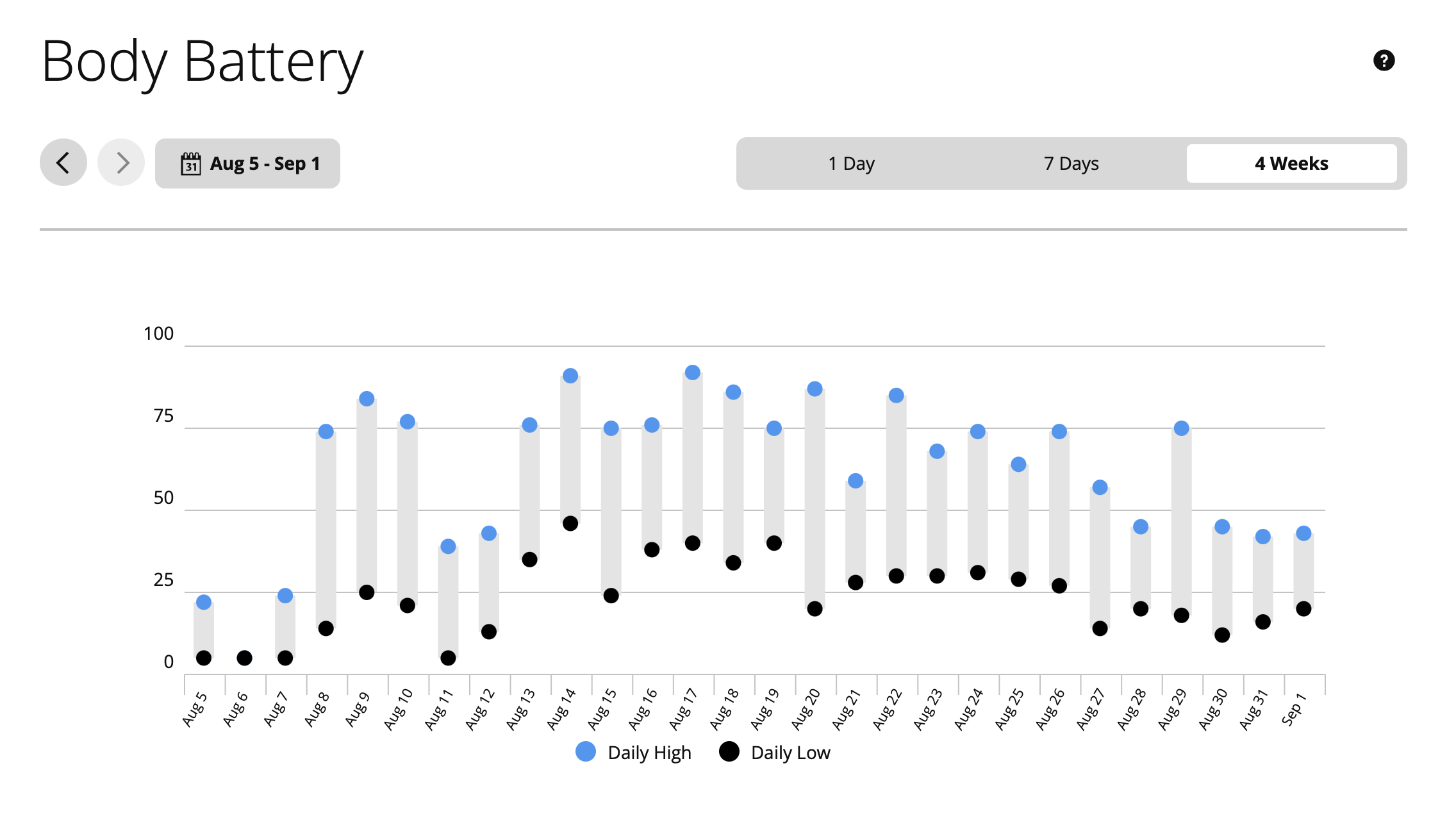
Steps are one of the easiest fitness metrics to understand, but they only tell part of the story. I can have a high-step day and feel great, or a relatively low-step day that leaves me mentally exhausted. Running a business comes with a workload that doesn’t always register on a pedometer. Client meetings, phone calls, deadlines, travel, training sessions, recording podcasts, working on the computer, and making decisions throughout the day all contribute to stress and fatigue.
That is why I find Garmin’s Body Battery information more useful than simply chasing a daily step goal. If I start the morning reasonably recovered and watch that number decline throughout a particularly demanding day, it provides another piece of information about how my body is responding. Combined with sleep, HRV, stress, and Training Readiness, it gives me context that a simple activity tracker cannot provide.
I don’t allow a wearable to decide what I can or cannot do. If Garmin tells me my Training Readiness is low but I have a full day of dog training scheduled, the dogs and clients aren’t going to care what my Garmin says. But I can use that information to make better decisions elsewhere. Maybe that isn’t the evening to add a particularly hard workout. Maybe getting to bed earlier is more valuable. The numbers are information, not instructions.
Heart Rate Tracking Has Been Excellent
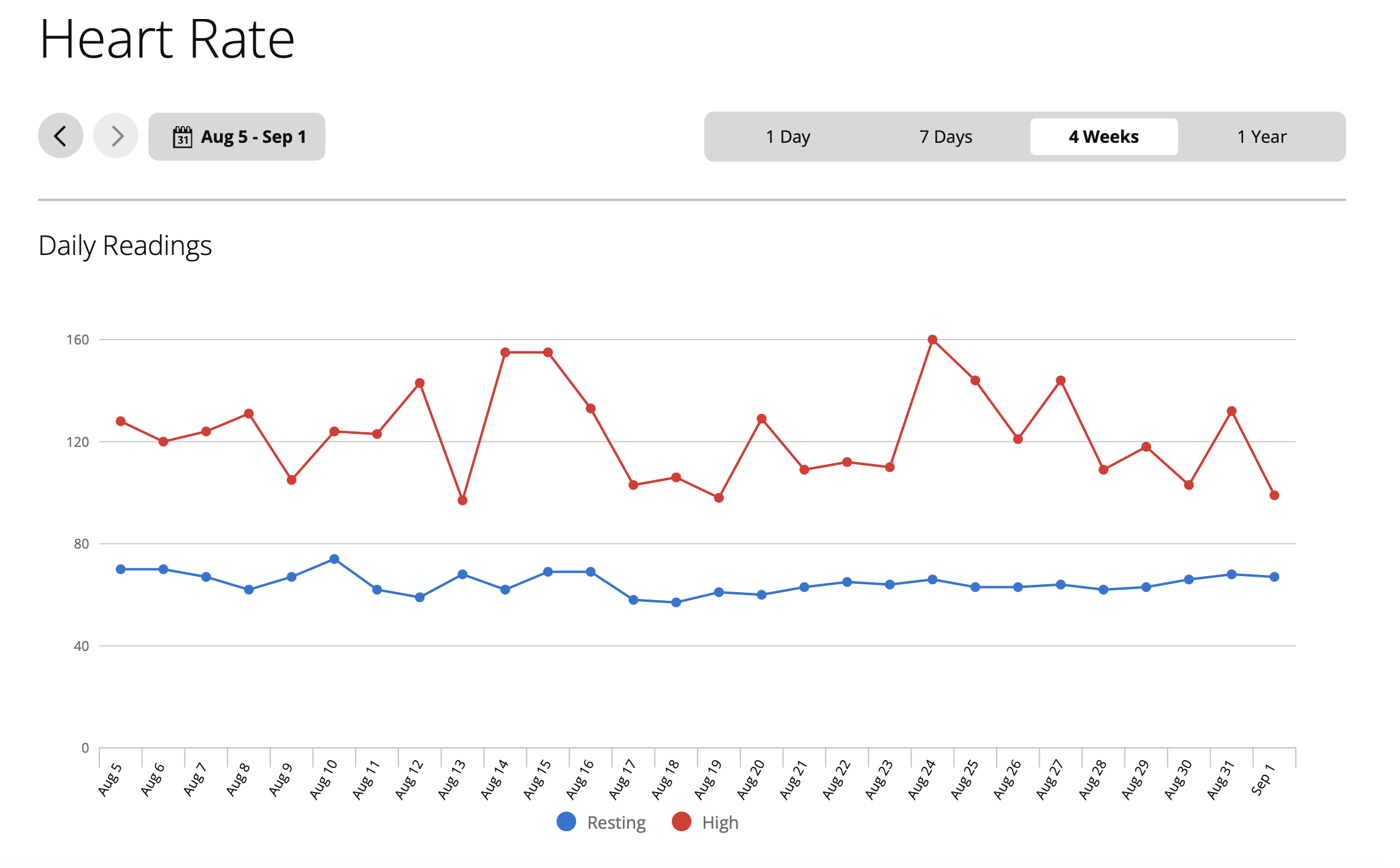
I have also been impressed with the Cirqa’s heart rate performance, particularly during gym workouts. The device uses Garmin’s Gen 4 optical heart rate sensor and includes skin temperature tracking and Pulse Ox for blood oxygen monitoring. It does not include an ECG, which is something potential buyers should know, but that hasn’t been an issue for how I use the device.
For me, consistency matters more than simply having a long list of sensors on a specification sheet. If I am going to use heart rate information to understand workout intensity and recovery, I want the readings to make sense during actual training. So far, the Cirqa has performed exceptionally well for me in that regard. It can also broadcast heart rate via ANT+ and Bluetooth Smart, which adds utility with compatible fitness equipment and other devices.
This is another area where the Cirqa feels more like a serious activity band than a basic one. It may look simple because there is no display, but quite a bit is happening beneath the surface. Garmin has essentially removed the watch portion while retaining many of the health and fitness capabilities that make its ecosystem useful.
Alaska Is a Good Place to Test a Fitness Tracker
Living in Alaska has a way of exposing the weaknesses in outdoor and fitness technology. Our routines can change dramatically throughout the year. Summer brings extremely long days and opportunities to spend hours outside. Winter brings cold temperatures, darkness, snow, ice, and conditions that can make a normal workday more effortful. For someone working with dogs, those seasonal changes are even more noticeable because the work doesn’t suddenly move indoors just because the weather isn’t cooperating.
The Cirqa won’t replace my Fenix 8 when I am heading into the backcountry or doing anything where navigation, GPS, maps, and real-time information matter. It doesn’t have onboard GPS, so GPS-based activities rely on a connected phone. That limitation needs to be understood before buying it. If you want a device that can independently record a wilderness hike and guide you back to the trailhead, buy a Garmin watch, not the Cirqa.
For normal daily activity, however, I don’t necessarily need another GPS receiver on my wrist. Walking dogs, working with clients, going to the gym, doing chores, and moving through a normal workday don’t require a map. What matters more is whether the tracker is comfortable enough for me to keep wearing it. The Cirqa succeeds because I can largely forget that it is there.
Ten-Day Battery Life Makes a Difference
Garmin rates the Cirqa for up to 10 days of battery life on a charge, and long battery life is particularly important for this type of device. A health tracker becomes less useful every time you take it off. If the entire point is continuous data on activity, stress, sleep, and recovery, constantly charging the tracker creates gaps in the very information you bought it to collect.
Sleep makes this even more important. I don’t want to get to the end of the day and discover that I need to choose between charging my tracker overnight and collecting sleep data. With battery life measured in days rather than hours, that is much less of an issue with the Cirqa. I can find a convenient time to charge it rather than building my routine around the device.
That contributes to what I think is the Cirqa’s overall philosophy. It isn’t supposed to demand much attention. You put it on, let it collect information, charge it occasionally, and check Garmin Connect when you actually want to see the results. For a device without a display, that is exactly how the experience should work.
The Lack of a Screen Is Actually a Feature
Spending $199.99 on a fitness tracker without a screen might initially seem strange, especially when inexpensive smartwatches offer bright displays, notifications, apps, and dozens of watch faces. After using the Cirqa, however, I think the absence of a display is one of its strongest features. I already have enough screens competing for my attention throughout the day.
My phone has a screen. My computer has a screen. My Fenix 8 has a screen. There are screens in the truck, around the office, and almost everywhere else. I don’t need my fitness tracker buzzing and lighting up every few minutes to tell me something else. The Cirqa quietly collects information and lets me decide when I want to look at it.
That simplicity also makes it work much better alongside a traditional watch. If I am wearing my Explorer II, I don’t need another watch face on the opposite wrist. The Cirqa doesn’t try to compete with it. It has a completely different job, and I have come to appreciate that more than I expected.
No Mandatory Subscription Is a Major Advantage
One of the Cirqa’s biggest advantages over some competing screenless fitness platforms is that Garmin does not require a monthly subscription to access the core health, sleep, fitness, and training information that makes the device useful. There may be additional services available through the larger Garmin Connect ecosystem, but I don’t need to pay a monthly fee simply to continue using the fundamental capabilities of a device I already purchased.
That matters when evaluating the $199.99 price. Two hundred dollars isn’t inexpensive for a fitness band without a display, and there are certainly cheaper ways to count steps and record heart rate. The value proposition makes more sense when you consider the long-term cost of ownership and Garmin’s broader ecosystem. I would rather know the device’s cost when I buy it than feel like I am renting access to my own fitness data month after month.
For existing Garmin users, the equation becomes even easier. I already use Garmin Connect and have years of data on the platform. I don’t need another app, another account, another dashboard, or another subscription. The Cirqa simply becomes another way of feeding information into a system I already use.
Full disclosure, I am a subscriber to Garmin Connect+
What I Don’t Like About the Cirqa
The Cirqa isn’t perfect, and the lack of a display will immediately eliminate it for some people. If you want to look at your wrist during a workout and see your pace, distance, heart rate, or other information, this isn’t designed to do that. You will need your phone, another compatible device, or a Garmin watch. The same applies to GPS. Because there is no onboard GPS, anyone who wants independent GPS tracking should be aware of this limitation before buying.
I have also found swapping bands using the quick-fit pins more awkward than I would like. This isn’t something that ruins the experience, but it’s an area Garmin could improve, particularly for a product where different wearing options are part of the appeal. I am especially interested to see whether the biceps band changes my opinion once mine finally arrives.
Then there is the price. At $199.99, the Cirqa needs to do more for you than simply count steps. If that is all you want, there are far cheaper devices available. The Cirqa starts making sense when sleep, recovery, heart rate, HRV, Body Battery, Training Readiness, and integration with Garmin Connect matter to you. It makes even more sense if you already own another Garmin device.
Who Should Buy the Garmin Cirqa?
I think the Cirqa makes the most sense for someone who wants continuous health and fitness tracking without another screen demanding attention. It is particularly interesting for people who already own a Garmin watch but don’t necessarily want to wear that watch 24 hours a day. A Fenix owner who wants something lighter for sleeping is an obvious example, but I think traditional watch enthusiasts may be an equally interesting audience.
If you own mechanical watches and have found yourself wearing them less because you don’t want to lose your health and fitness tracking, the Cirqa provides a surprisingly good solution. Wear the watch you actually want to wear and let the Cirqa handle the data collection. If the biceps band works well, that combination becomes even more compelling because the fitness tracker can essentially disappear under a shirt sleeve.
I also think it makes sense for busy professionals whose daily activity isn’t confined to scheduled workouts. My life as a dog training business owner in Alaska involves a combination of physical work, office work, outdoor activity, workouts, travel, and everything else that comes with running a business. I don’t need another device telling me what to do every five minutes. I need something that quietly records the day and gives me useful information when I am ready to look at it.
Thumbs Up or Down on the Garmin Cirqa
I didn’t start using the Garmin Cirqa expecting it to replace my Fenix 8, and after spending time with it, I wouldn’t want it to. The Fenix 8 remains the watch I reach for when I am training outdoors, traveling, navigating, exploring Alaska, or doing something where GPS, maps, and real-time information matter. It is still my primary Garmin and one of the most capable pieces of outdoor technology I own.
The Cirqa has found a completely different place in my routine. It has become an exceptional sleep tracker, a lightweight everyday fitness tracker, and a way to maintain continuity in my Garmin health and recovery data when I don’t want to wear the Fenix. It works particularly well during the kind of unpredictable workdays that come with running a dog training business because I can put it on in the morning and largely forget about it.
Perhaps the biggest surprise is that it has also given me my mechanical watches back. I can wear my Rolex Explorer II or Deepsea without feeling like I am giving up an entire day of fitness and health information. Yes, wearing a watch on one wrist and a fitness tracker on the other might look a little dorky, and I am still waiting for the backordered biceps band that may solve that problem. But right now, the setup works, and that matters more to me than how it looks.
At $199.99, the Garmin Cirqa isn’t going to make sense for everyone. If you want maps, onboard GPS, workout information on your wrist, or a traditional smartwatch experience, look elsewhere. If you want a lightweight device that quietly tracks your health, fitness, sleep, and recovery without another screen or mandatory subscription, it becomes much more interesting. If you already live in the Garmin ecosystem, it becomes more interesting still.
The best compliment I can give the Cirqa is probably the simplest one. Most of the time, I forget I am wearing it. It doesn’t try to replace my Fenix 8, my mechanical watches, or anything else on my wrist. It simply fills the gaps between them, keeps collecting the information I care about, and stays out of the way. For a screenless fitness tracker, that may be exactly the point.
Thumbs Up