The Early Years: Establishing the Blueprint
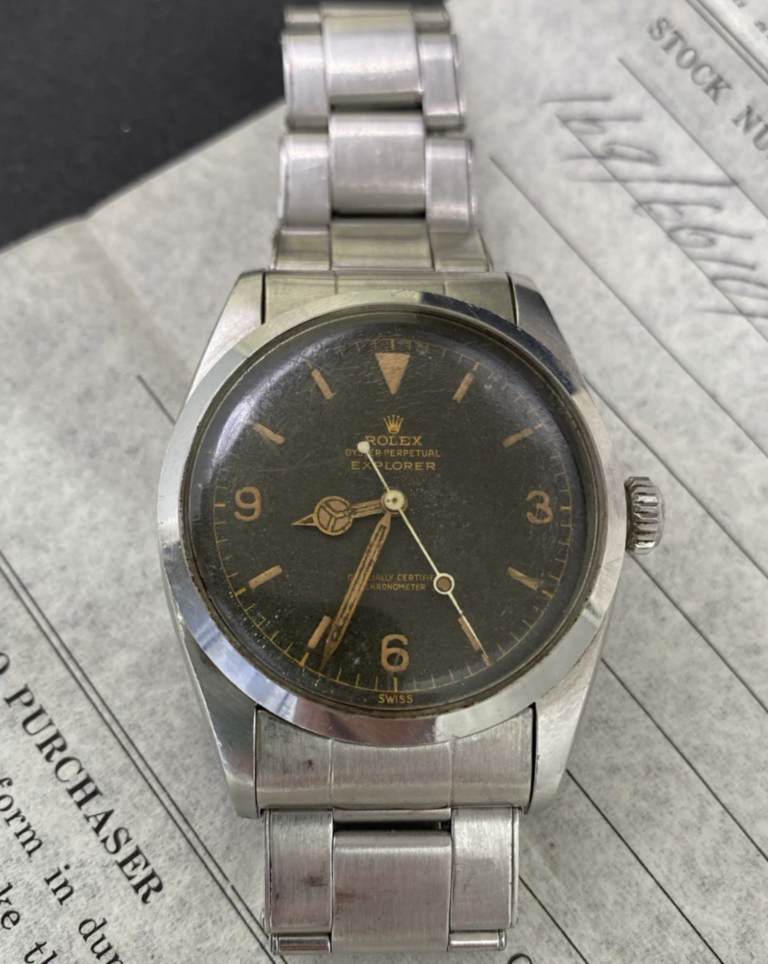
The first true Explorers appeared in the early 1950s following Rolex’s association with high-altitude expeditions. Early references such as the 6150 and 6350 experimented with layout and dial text before the design stabilized.
By 1955, the Rolex Explorer ref. 6610 established what we now recognize as the modern Explorer: a 36mm Oyster case, highly legible black dial, and the now-iconic 3-6-9 configuration. The watch was modest in size but serious in purpose. Today, examples of the 6610 can approach $100,000, reflecting both rarity and historical importance.
In 1963, Rolex introduced what many collectors consider the definitive vintage Explorer: the ref. 1016. Produced for more than 25 years, it became the longest-running Explorer reference in history. The 1016 refined water resistance, chronometer certification, and movement durability, but visually it remained clean and uncompromising.
This is the reference that cemented the Explorer’s reputation. Not flashy. Not complicated. Just dependable.
The Modern Era: Refinement Without Reinvention
In 1989, Rolex ushered the Explorer into the modern age with the ref. 14270. Sapphire crystal replaced acrylic. Applied white-gold indices replaced painted numerals. The Caliber 3000 improved accuracy and reliability. The watch felt sharper and more contemporary, yet unmistakably an Explorer.
The ref. 114270, introduced in 2001, continued that evolution with the Caliber 3130 and subtle bracelet improvements. It preserved the traditional 36mm size, a dimension that many collectors now consider the sweet spot for the Explorer’s proportions.
In 2010, Rolex made a bold move with the ref. 214270, increasing the case size to 39mm. While technically impressive, the initial release drew criticism for slightly undersized hands relative to the larger dial. Rolex quietly corrected this in later production runs. The 214270 has since earned appreciation as a modern alternative for those who prefer a slightly larger wrist presence.
Then in 2021, Rolex returned the Explorer to its roots with the ref. 124270, restoring the 36mm case while incorporating the latest-generation Caliber 3230 with a 70-hour power reserve. The message was clear: the original proportions still matter. Rolex also introduced a 40mm variant, broadening appeal without abandoning tradition.
Through every iteration, the brand resisted the temptation to overcomplicate the design. That discipline is rare.
Explorer vs. Explorer II: Purpose Defines the Difference
In your previous articles, we discussed the distinction between the Explorer and its more specialized sibling, the Rolex Explorer II.
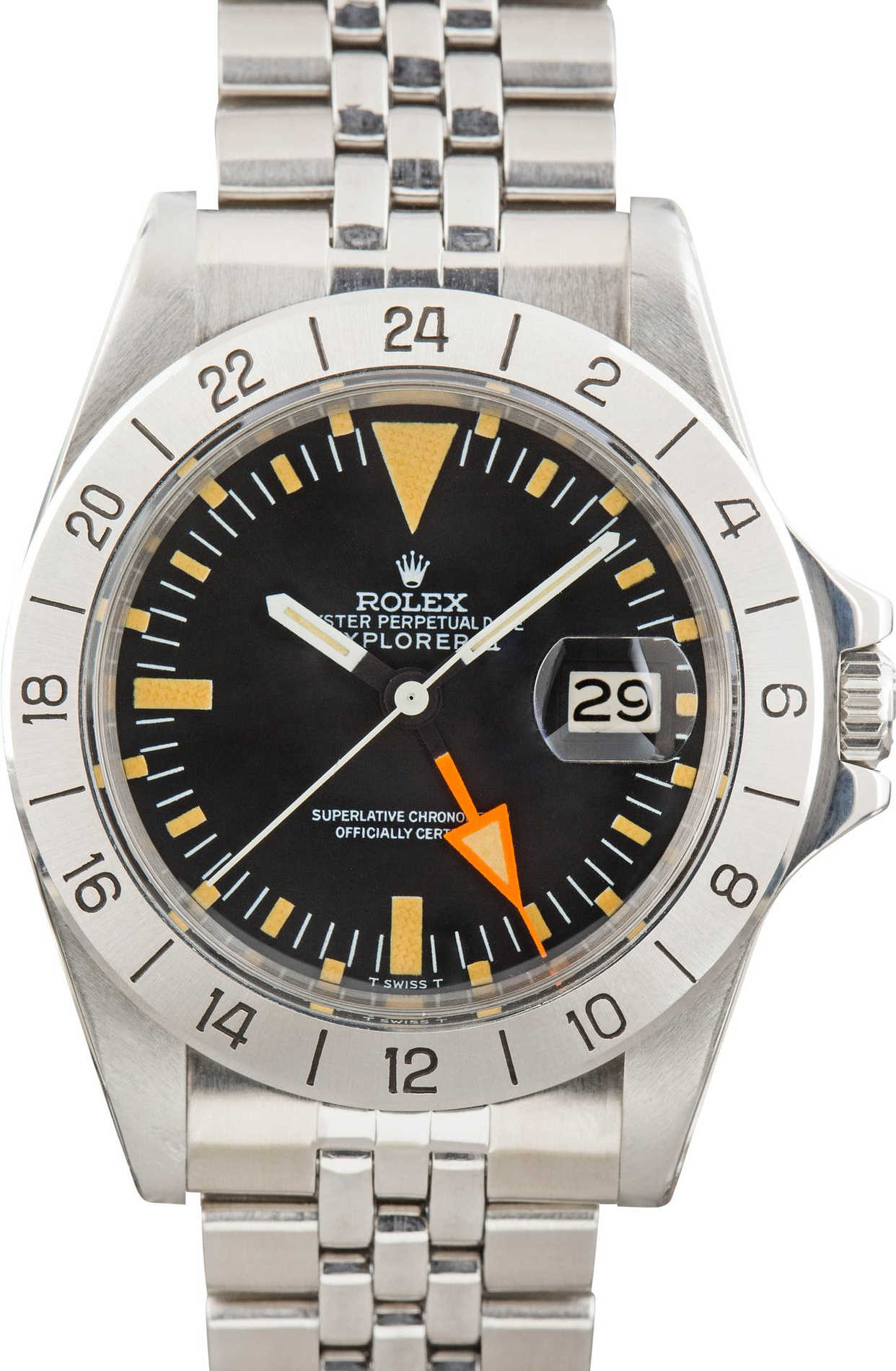
If the Explorer is the minimalist field watch, the Explorer II is the instrument for extreme environments. Introduced in 1971, it added a fixed 24-hour bezel and GMT hand, originally intended for cave explorers and polar expeditions where distinguishing day from night could be difficult.
The vintage Explorer II ref. 1655, often associated with Steve McQueen, is now trading around $30,000, a reflection of both cultural mythology and genuine scarcity.
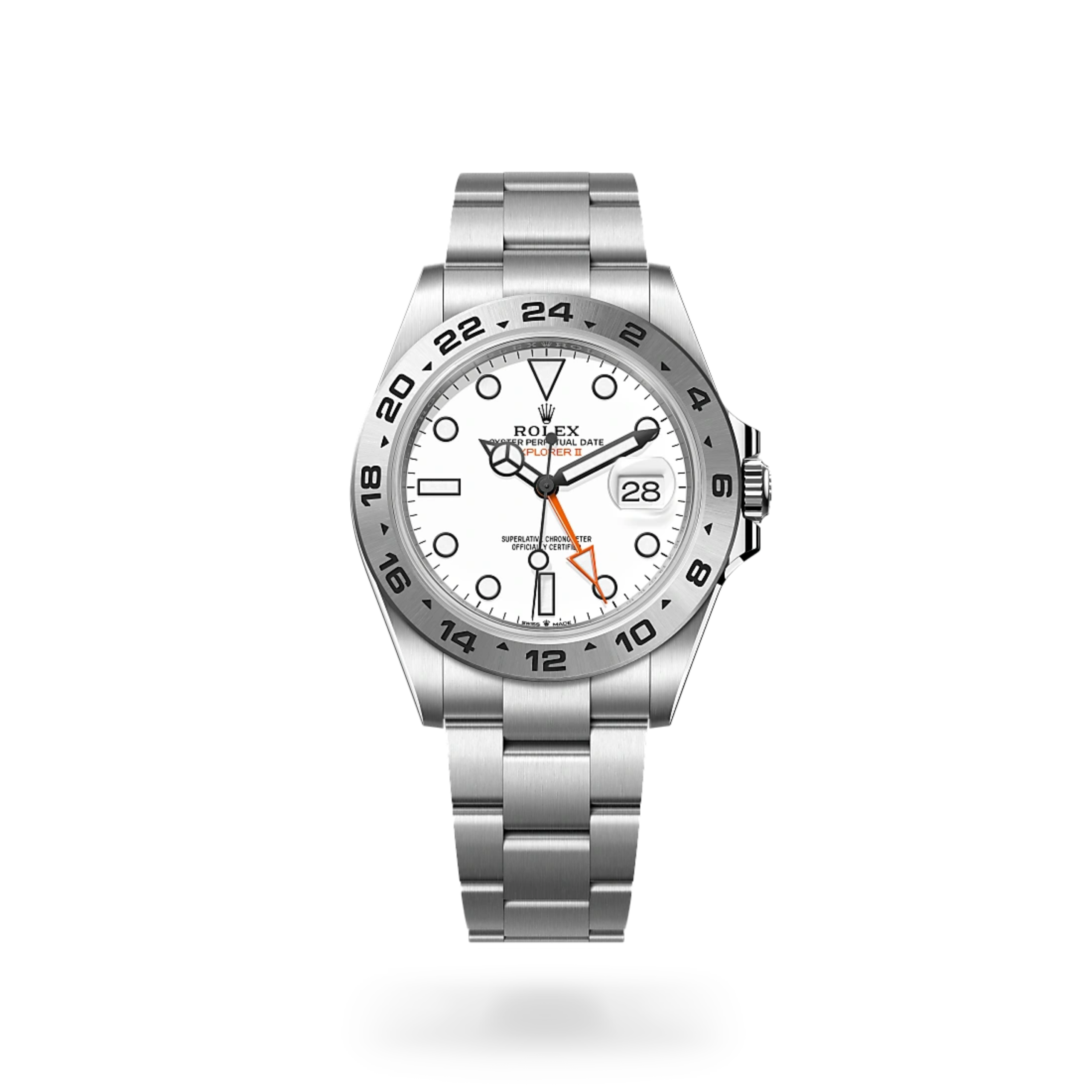
My own 2018 Rolex Explorer II Polar (ref. 216570) represents the modern expression of that lineage. With its larger 42mm case, orange GMT hand, and high-contrast white dial, it is a far more assertive watch than the Explorer I. Current market prices for the 216570 hover around $12,500, positioning it as a comparatively accessible entry into Rolex’s professional sports models.
Where the Explorer I thrives on restraint, the Explorer II embraces technical presence.
Why the Explorer Endures
The Explorer’s longevity is not driven by hype cycles or celebrity endorsements. It persists because Rolex understood something fundamental in 1953: a truly versatile watch does not need to shout.
Across seven decades, the silhouette remains instantly recognizable. A 1960s 1016 and a 2024 124270 share the same DNA. Improvements have occurred under the hood, better movements, improved materials, longer power reserves, but the face remains disciplined and legible.
In an industry that frequently reinvents itself for novelty, the Explorer stands as a study in continuity.
That is why early references command six-figure prices. That is why modern versions sell steadily without theatrics. And that is why collectors who own one rarely part with it.
In your own collection, the Explorer II may represent the adventurous edge, the tool built for dual time zones and harsher conditions. But the Explorer I represents something subtler: confidence in simplicity.
And in watchmaking, that kind of confidence is harder to achieve than complication.
Sources:
The History of the Rolex Explorer