Introduction
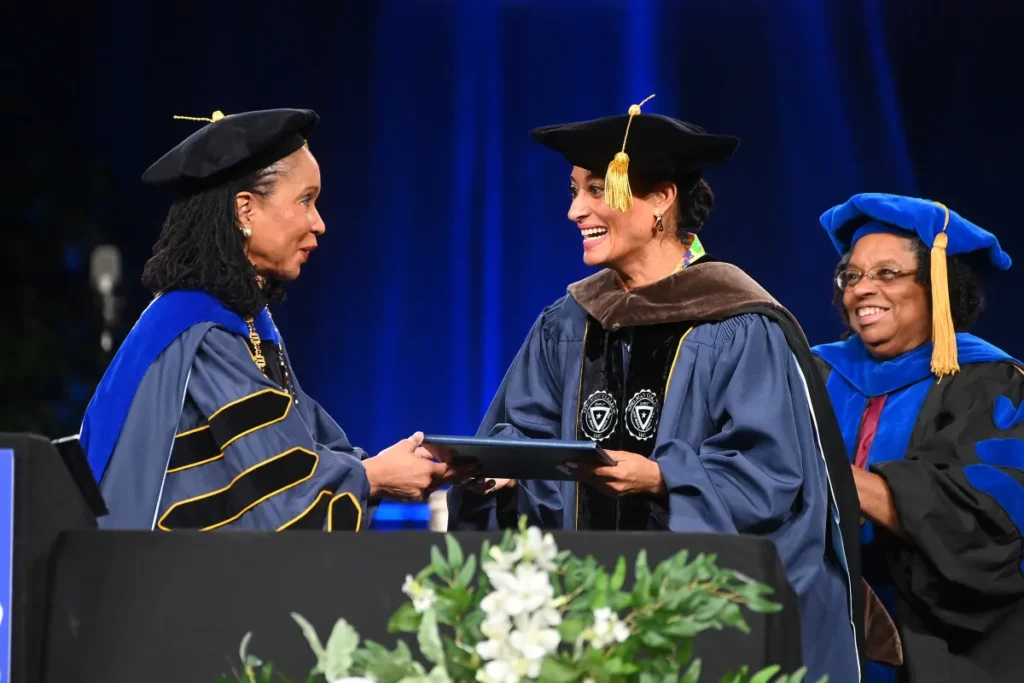
Within academia, the conferral of degrees typically signifies the culmination of rigorous intellectual achievement. However, honorary doctorates occupy a distinct position in this tradition. These awards, often bestowed upon individuals outside the conventional academic sphere, serve as symbolic acknowledgments of exceptional contributions to society, culture, or public service. In contrast to earned PhDs, which require years of original research and scholarly discipline, honorary degrees, often referred to as honoris causa (for the sake of honor), do not entail formal academic requirements or confer professional entitlements.
Honorary doctorates function as institutional gestures of recognition, yet their symbolic nature warrants critical examination. The legitimacy and value of these accolades remain contested: some view them as publicity mechanisms, while others argue they meaningfully acknowledge non-academic excellence. This article examines the historical origins, controversies, and notable recipients of honorary PhDs, drawing on established critiques to elucidate their complex role in contemporary higher education.
Historical Origins and Institutional Rationale
The practice of granting honorary degrees traces its roots to late medieval Europe, with the first recorded instance occurring at Oxford University around 1478 or 1479, when Lionel Woodville, Dean of Exeter, received one. In the American context, Harvard University claims to have pioneered the tradition by honoring Benjamin Franklin in 1753, though rival institutions like Brandeis assert an earlier precedent with Increase Mather in 1692. Initially intended to establish alliances with important figures, such as church leaders or benefactors, these degrees evolved into tools for universities to enhance their prestige and fundraising.
Proponents argue that honorary doctorates recognize societal contributions beyond academia, honoring innovators, philanthropists, and cultural figures whose achievements align with institutional values. However, some analyses contend that these awards often serve as publicity mechanisms, which may provoke controversy and turn commencement ceremonies into sites of public debate.
The rationale for awarding honorary degrees also encompasses financial incentives. Some institutions have been accused of granting degrees in exchange for significant donations, thereby perpetuating inequalities in which financial resources outweigh merit. This institutional bias reflects a broader critique: honorary PhDs are seldom awarded to individuals of average means, instead disproportionately favoring the elite and reinforcing existing socioeconomic divisions.
Controversies and Ethical Dilemmas
At the heart of the “real truth” lies a web of moral concerns. Honorary degrees are purely titular; they confer no professional qualifications and should not entitle recipients to use the “Dr.” prefix within academic or professional circumstances, as this can mislead the public about one’s expertise. Yet instances abound in which awardees, particularly celebrities, adopt the title, sparking backlash from holders of earned doctorates who view it as a dilution of scholarly achievement. Critics maintain that such practices devalue genuine PhDs, rendering education into a commodified spectacle.
Political considerations also contribute to the controversy surrounding honorary degrees. For example, in 1985, Oxford University declined to award Margaret Thatcher an honorary degree in response to her education funding cuts, demonstrating how such honors can serve as proxies for institutional dissent. Similarly, in 1992, the Philosophy Faculty at Cambridge University vetoed Jacques Derrida’s nomination, citing a perceived lack of academic rigor in his work.
In recent years, universities have rescinded honorary degrees from individuals involved in ethical scandals, highlighting the precarious nature of these commendations. As one observer notes, honorary degrees risk involving institutions in controversies that could be avoided, often prioritizing celebrity or influence over substantive merit.
The selection process for honorary degrees also invites skepticism. When awards are granted to entertainers or politicians lacking scholarly connections, such decisions may be perceived as attempts to maintain institutional relevance, thereby eroding public trust in academia. Some institutions, such as the Massachusetts Institute of Technology (MIT), have rejected the practice entirely, labeling it “spurious” and thereby challenging the legitimacy of honorary PhDs.
Notable Recipients: A Spectrum of Influence
Despite these criticisms, honorary doctorates have been awarded to a wide range of individuals whose contributions have significantly influenced global discourse. The following examples, organized by field, illustrate both the diversity and, at times, the irony inherent in these honors.
Cultural and Entertainment Figures
- Taylor Swift: In 2022, New York University awarded Swift a Doctor of Fine Arts in recognition of her substantial impact on music and storytelling, despite her lack of formal higher education. This decision sparked debate regarding the appropriateness of elevating popular culture figures through academic honors.
- Meryl Streep: Streep has received honorary doctorates from Yale, Princeton, Harvard, and Indiana University in recognition of her exceptional contributions to the arts.
- Oprah Winfrey: Winfrey has received four honorary degrees, including from Harvard and Duke, in acknowledgment of her philanthropic efforts and influence in media, which are regarded as significant examples of social impact.
- Kanye West: The Art Institute of Chicago awarded West an honorary doctorate in 2015 for his “genre-defying” contributions to music and culture, despite his lack of a completed college education.
Political and Humanitarian Leaders
- Nelson Mandela: Numerous institutions, including the University of London, conferred honorary doctorates upon Mandela in recognition of his leadership in the anti-apartheid movement, symbolizing international solidarity.
- Mahatma Gandhi: Gandhi was posthumously awarded honorary degrees by universities worldwide, reflecting recognition of his enduring philosophy of non-violence.
- Barack Obama: The former U.S. President received honorary doctorates from institutions including Notre Dame, acknowledging his public service and oratorical skill.
Other Notables
- Tom Hanks: Harvard University awarded Hanks a Doctor of Arts in 2023 in recognition of his contributions to cinema.
- J.K. Rowling: Accumulating seven honorary degrees, Rowling’s literary influence, especially through the Harry Potter series, has been widely celebrated.
- A.P.J. Abdul Kalam: The former President of India received more than 40 honorary doctorates in recognition of his contributions to science and education.
These examples suggest a pattern: although many recipients have notable achievements, honorary degrees often serve to enhance institutional visibility rather than reflect academic rigor.
Conclusion
Honorary PhDs embody a paradox, symbols of esteem that simultaneously invite derision for their supposed superficiality. They neither equate to earned doctorates nor empower professional practice, yet their persistence highlights academia’s interplay with wider society.
For universities, the challenge is balancing recognition with integrity, ensuring awards reflect merit rather than expediency. As discussions persist, one truth endures: these degrees, for better or worse, mirror the delicate dynamics of power, influence, and achievement in our world. Readers are encouraged to scrutinize such honors critically, appreciating their inspirational potential while questioning their basic equity.
Sources:
Manjunath, T. M. (2026). Honorary Doctorates: Time to Replace Them with a Non-Academic Honorific.